
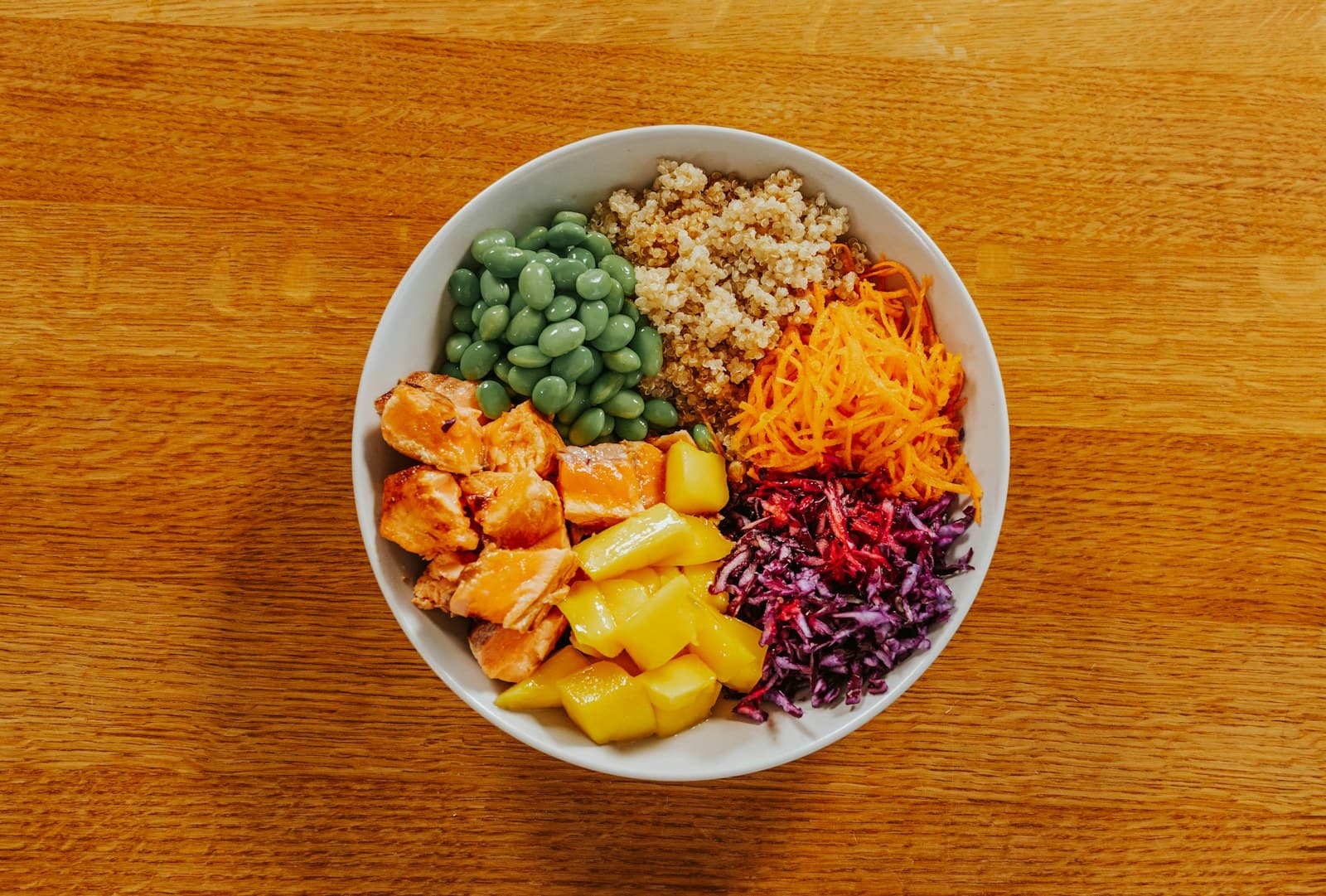
Begin with the legume anchor
When a meal is built around beans, lentils, peas, or a combination of legumes, begin your review by locating the main legume component. Is it a visible scoop of beans, a lentil stew, a pea purée, a blended soup, or a filling folded into another food? This first description gives you a more useful starting point than judging the meal by its appearance or by a single total.
Next, consider how much of that component appears in the portion you ate. A photo can show where the legumes are, but it may not reveal their depth in a bowl, how densely a mash was packed, or how much of a blended ingredient is distributed through the recipe. If the amount is uncertain, keep the estimate provisional and note what you would change after checking the dish more closely.
Separate the dish into visible parts
Mixed legume meals often combine several contributors: beans with rice, lentils with vegetables, peas in a sauce, or more than one legume in a stew. Review the dish in parts rather than assuming that every ingredient contributes equally to the protein estimate. Identify the legume base, then list the other substantial ingredients that may be represented in the recipe or served alongside it.
This approach is especially useful when legumes are mashed, blended, or hidden inside a patty, soup, dip, or casserole. The photo may show the finished dish without showing the original proportions. Record the preparation in plain language, such as “lentil soup with a thick texture” or “mixed-bean filling,” and flag ingredients whose amounts are unclear. The aim is a transparent estimate, not a verdict on the meal.
Use references and labels in the right order
FoodData Central provides reference nutrient records, but the relevant entry depends on the food and preparation. Values can vary by food entry, brand, recipe, preparation, and portion. For a legume-based meal, compare the description of the food in your log with the closest available reference rather than selecting a record solely because its name sounds similar.
For packaged beans, lentils, peas, soups, or prepared meals, read the Nutrition Facts label by checking serving size and servings per container before interpreting protein or calories. Then compare the labeled portion with the amount you actually ate. If the container has more than one serving, using the label’s protein number without checking that detail can make the review misleading.
Edit uncertainty instead of hiding it
A FoodSnap photo estimate can be a useful first pass, especially when a meal has several legume components. Review the item names, portion descriptions, and preparation details it lists. If the meal contains a half-visible side of beans, a thick sauce, or a blended lentil base, adjust the relevant ingredient or portion when your own context gives you better information.
You do not need to resolve every unknown before saving a meal. A practical review can distinguish between what is visible, what was confirmed from a package or recipe, and what remains approximate. For example, you might know that the dish included lentils and peas but be unsure whether the serving was shallow or deep. Keeping that uncertainty attached to the entry makes later comparisons more honest.
Review patterns without ranking foods
After several entries, look for recurring details in how you record legume-based meals. You may notice that soups are harder to review than plated beans, or that packaged dishes become clearer when you record the label’s serving information. You might also see that mixed-legume recipes need a short ingredient note to make their estimates easier to revisit.
Use those observations to improve your logging process, not to assign moral value to a meal or compare one food with another as superior. A useful review asks whether the estimate reflects the portion, preparation, and available reference. When those details change, the estimate may change too. That flexibility is part of reading a food log with appropriate context.
Sources
- USDA FoodData Central — U.S. Department of Agriculture
- How to Understand and Use the Nutrition Facts Label — U.S. Food and Drug Administration
FoodSnap provides editable nutrition estimates. This article is for general educational purposes and is not a substitute for individualized medical or dietary advice from a qualified professional.