
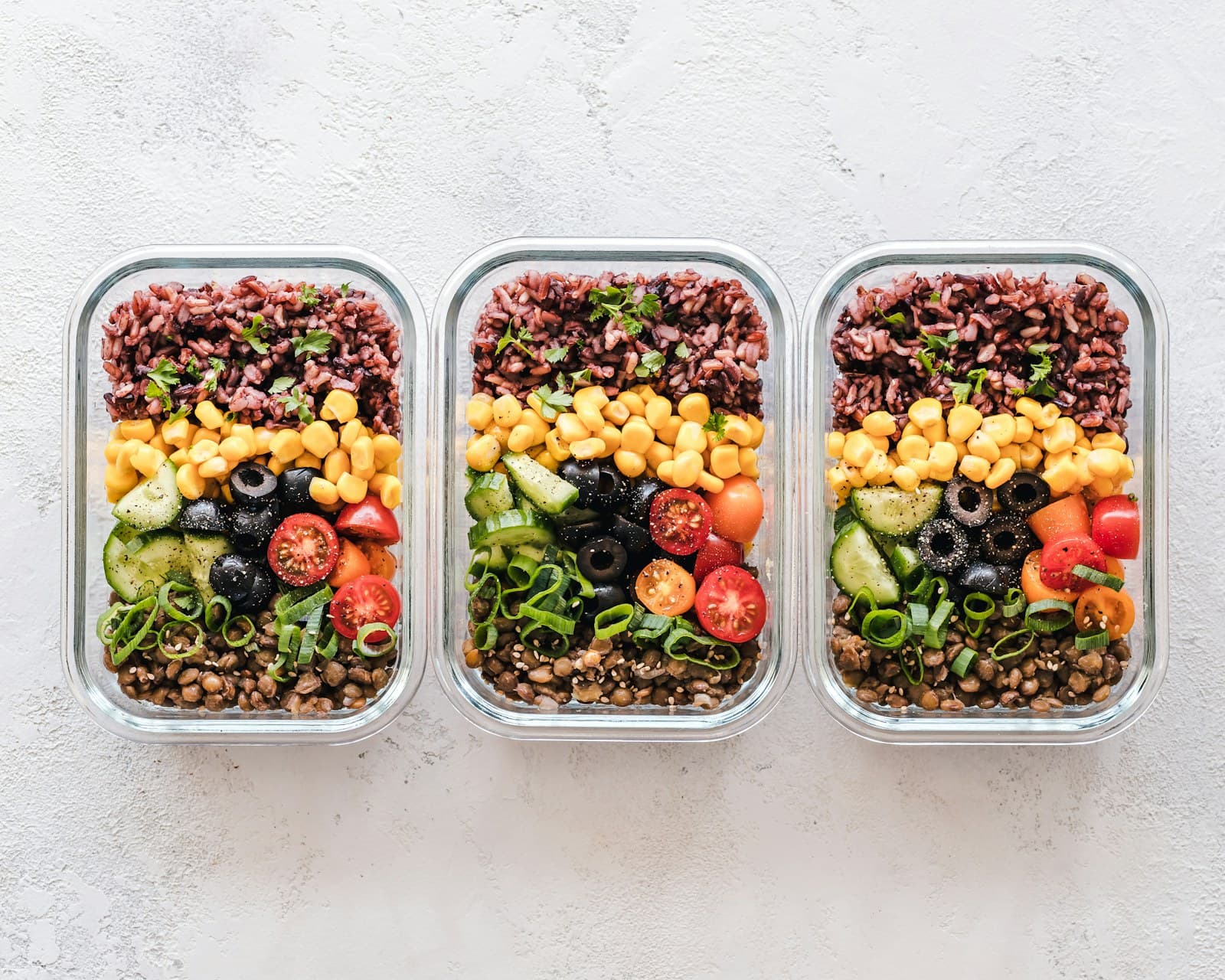
Start with components, not finished recipes
A useful one-session plan begins with parts that can move between meals. You might prepare a grain or starchy base, a tray of vegetables, a protein-rich ingredient, and one or two flavorful additions. The goal is not to make several identical plates. It is to create a small set of options that can be combined in different ways over the next few dinners.
Choose components with different textures and uses. A roasted vegetable can accompany a bowl, fill a wrap, or become part of a warm salad. A cooked grain can be served with a saucy mixture one night and crisped in a pan another. Keeping each part relatively simple makes it easier to change the final dish without starting from zero.
Use a simple planning map
Before cooking, sketch a short dinner map. List the components in one column and possible formats in another: bowl, skillet, salad, soup, tacos, or a plate with separate items. Then assign a different combination to each night. This small exercise can reveal whether you have enough variety in flavor, texture, and preparation style without locking you into a detailed menu.
A component should ideally have more than one role. For example, cooked beans may work in a grain bowl, a blended sauce, or a quick skillet filling. Fresh herbs, citrus, yogurt, salsa, or a spice mixture can change the character of the same base. Keep those finishing items separate so they can be adjusted at the table and so one preparation does not dictate every dinner.
Build variety with the finishing touches
Seasoning is one of the easiest ways to make prepared components feel distinct. Pair one dinner with a bright, acidic dressing, another with a smoky spice blend, and another with a fresh herb or chile topping. You can also change temperature and texture: serve vegetables warm one night, chilled or room temperature the next, or add a crisp element at the last moment.
Variety does not require a complicated recipe every evening. The World Health Organization’s healthy-diet guidance emphasizes variety and balance, which can serve as a broad lens for this kind of planning. In practice, that means looking across the dinners you are assembling and asking whether the overall set includes different foods and preparations, rather than judging one plate in isolation.
Keep portions and substitutions open
Prepare components in amounts that match your household and schedule, but avoid treating the prep plan as a fixed serving prescription. At dinner, you can decide how much of each part fits your appetite, the other foods on the plate, and what needs to be used first. Keep extra sauce, toppings, or vegetables available separately when possible; this makes last-minute adjustments easier.
The MyPlate Plan illustrates how foods can be considered across food groups for planning purposes. It is a useful organizing idea, not a reason to force every dinner into the same pattern or to calculate an individualized target here. Use it to notice what kinds of components you have available, then let preference, leftovers, and the meal format guide the final combination.
Review the dinner after it is assembled
Once a meal is plated, take a quick look at what actually made it into the bowl or onto the plate. Note the main components, toppings, cooking method, and any added oil or sauce. This record can help you improve the next prep session: perhaps a component was too dry, a topping ran out early, or one base worked better in a skillet than in a salad.
If you use FoodSnap to review a dinner photo, treat the calorie, macro, ingredient, and portion information as editable estimates. A photo may not show every ingredient, the amount of cooking fat, or the exact quantity served. Add context and revise the entry when your prepared components or serving amount differ from the initial suggestion.
Sources
- MyPlate Plan — USDA MyPlate
- Healthy diet — World Health Organization
FoodSnap provides editable nutrition estimates. This article is for general educational purposes and is not a substitute for individualized medical or dietary advice from a qualified professional.