
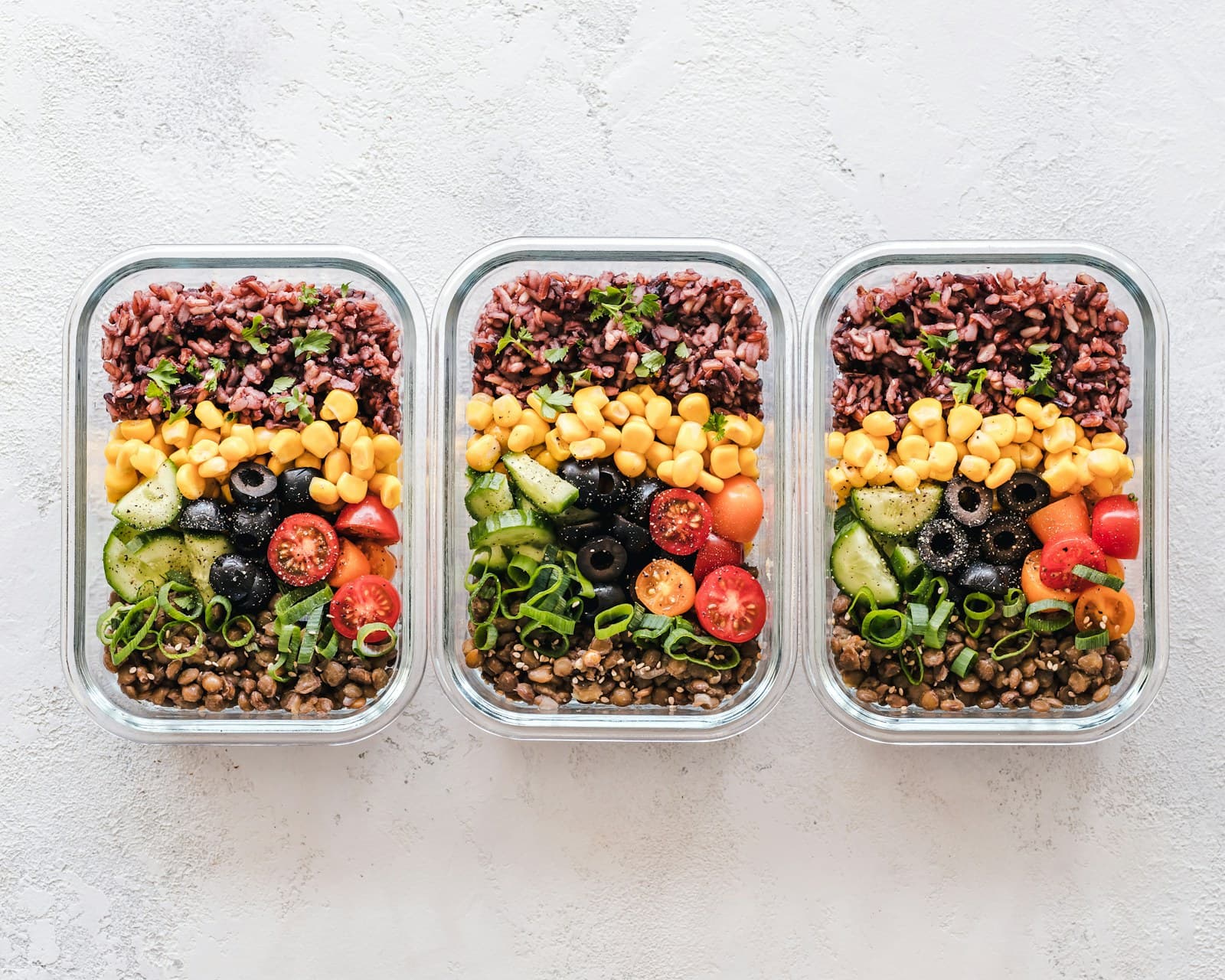
Start with a flexible lunch framework
A portable lunch does not need to be a single assembled recipe. Think of it as a small set of components that can travel together: a main item, one or more produce choices, a grain or other starch if desired, and a flavor element such as a spread, dressing, or seasoning. This structure gives you a way to plan without deciding every detail in advance.
The USDA MyPlate Plan illustrates planning through food groups, while the World Health Organization describes variety and balance as parts of a healthy diet. Use those ideas as broad prompts rather than personal targets. Your lunch can be adjusted for appetite, schedule, available foods, cultural preferences, and the type of container you have available.
Choose components that can change roles
Begin with the component that anchors the meal. It might be a sandwich, wrap, grain-based salad, leftovers, beans, eggs, cheese, fish, tofu, or another familiar option. Then add a produce component that fits the format: whole fruit, cut vegetables, a salad, or vegetables included in the main item. You do not need to force every choice into a standard recipe.
Next, consider texture, flavor, and convenience. A grain, potato, tortilla, or cracker may make sense for one lunch, while another may work better with extra produce or a different base. A dip, spread, dressing, nuts, seeds, or condiment can be packed separately when that makes the meal easier to customize. The aim is a useful set of choices, not a fixed formula.
Make portions visible and editable
Portable lunches often combine foods in ways that make portions hard to identify. A filled wrap may conceal its ingredients, and a salad container may place several foods under one layer. Before packing, note what is inside each component and whether an ingredient is mixed in, layered, or packed separately. This gives you better context later if you review a photo.
FoodSnap can provide editable estimates for calories, macros, ingredients, and portions from a food photo. Treat those results as a starting point, especially when the image cannot show the amount of filling, dressing, oil, or a packaged item. Adjust the entry to match what you packed, and keep uncertain details marked for later review instead of presenting an estimate as a measurement.
Build around preferences and substitutions
A checklist works best when it allows substitutions. If one produce choice is unavailable, choose another that fits the container. If a sandwich is inconvenient, use the same general components in a bowl, box, or wrap. You can also change textures, flavors, or the level of assembly without discarding the overall plan.
Write down preference-based decisions before they disappear into the finished lunch. For example, record that a spread was left out, a sauce was packed separately, or a grain was exchanged for another base. These notes make the saved meal more faithful to what you actually ate and help you reuse the structure without copying every ingredient.
Use a packing and review checklist
Before leaving, scan the lunch in four passes: main component, produce, optional grain or starch, and flavor additions. Confirm that each item you intend to eat is represented, including small packets, toppings, or sides. If the lunch contains a packaged food, keep its name or label information available when possible rather than relying only on the appearance of the package.
After eating, review the photo-based entry with the same flexible mindset. Edit the foods, amounts, and components that differ from the initial plan. The final record does not need to resemble a standard serving or a preset menu; it needs to describe your lunch clearly enough for your own comparison and planning. Repeating this checklist can make portable meals easier to adapt while leaving the important choices in your hands.
Sources
- MyPlate Plan — USDA MyPlate
- Healthy diet — World Health Organization
FoodSnap provides editable nutrition estimates. This article is for general educational purposes and is not a substitute for individualized medical or dietary advice from a qualified professional.