
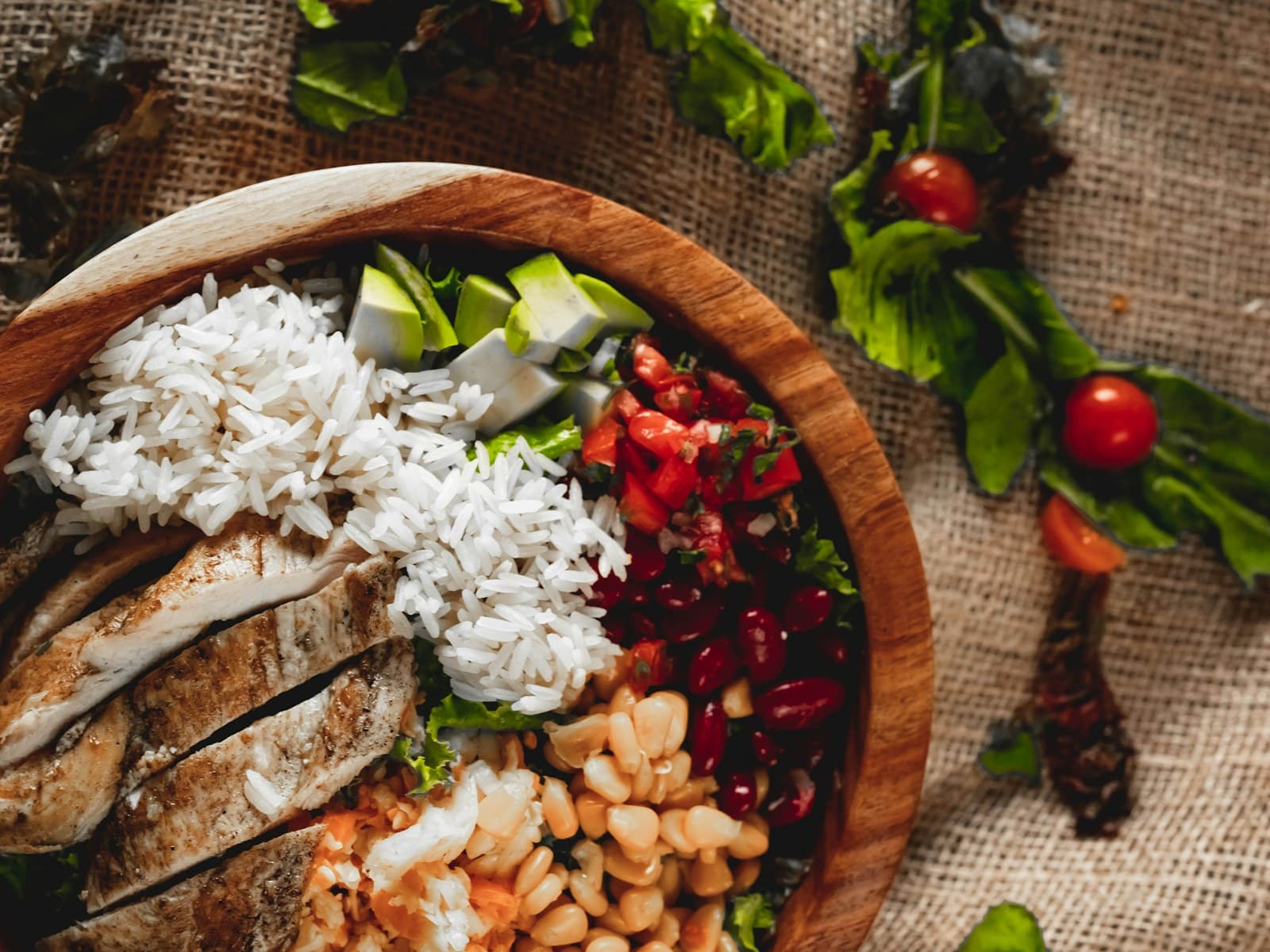
Start with the bowl’s component map
A breakfast bowl can look simple while containing several separate entries. Begin by listing what you can identify: the grain base, dairy or dairy alternative, fruit, nuts, seeds, and any toppings. If an ingredient is blended into the base rather than placed on top, note that distinction because the visible portion may not show the full amount.
Next, decide which details are known and which are assumptions. A photo may suggest that a bowl contains oats, yogurt, berries, and seeds, but it may not show whether the oats were measured dry or served cooked, whether the yogurt was sweetened, or how much seed mix sits below the fruit. FoodSnap’s calorie and macro results are estimates that can be edited as you clarify those details.
Review the grain base first
The grain often forms the largest visible layer, so start by identifying it and its preparation state. Record whether it appears to be oatmeal, another cooked grain, granola, cereal, or a combination. Then ask whether the portion is represented as a dry ingredient, a prepared serving, or part of a recipe. That choice can change which FoodData Central record is the closest reference for your review.
Look for additions folded into the grain, such as milk, sweetener, dried fruit, or nut butter. They may be easy to miss when the bowl has a uniform texture. If you are comparing the estimate with a package or recipe, use the named food entry and portion that best matches the actual preparation rather than relying on the bowl’s apparent volume alone. FoodData Central provides reference nutrient records, and values can vary by food entry, brand, recipe, preparation, and portion.
Separate dairy or alternatives from fruit
Identify the dairy or alternative as its own component, whether it appears as yogurt, milk, cottage cheese, or a plant-based option. Check the product style and any visible flavoring or sweetening when that information is available. Two products that look similar in a photo may have different reference entries, so record the most specific description you can support and leave uncertain details editable.
Then review the fruit by type and form. Fresh pieces, frozen fruit, purée, compote, and dried fruit should not automatically be treated as the same entry. Note fruit mixed through the base as well as fruit arranged on top. For each item, check whether the portion estimate reflects the amount shown rather than assuming that the entire bowl has one uniform ingredient.
Give nuts, seeds, and toppings their own lines
Nuts and seeds can be scattered across the surface, mixed into the grain, or included in a cluster. List them separately when you can: almonds are a different entry from walnuts, and a seed blend may contain several ingredients. If the photo does not reveal the type or amount, mark that uncertainty instead of assigning more detail than the image supports.
Use the same approach for toppings such as nut butter, coconut, cocoa, honey, jam, granola, or a drizzle. A thin-looking topping may still represent a distinct recipe or packaged food entry, while a topping hidden beneath fruit may be absent from the first visual review. If a topping came from a label, keep its product name and serving information with your notes so the estimate can be revisited.
Check the label before accepting the total
When a packaged ingredient is available, start with the Nutrition Facts label’s serving size and servings per container. The FDA recommends checking those fields before interpreting the listed calories and nutrients. Compare the serving shown on the label with the amount used in the bowl; one package is not automatically one serving, and one spoonful is not automatically the label’s stated serving.
Finally, review the total by asking whether every component has a plausible entry and portion. Look for duplicate ingredients, missing milk or sweetener, and a dry-versus-prepared mismatch. Compare calories, carbohydrate, protein, and fat as a group rather than focusing on one number. FoodData Central can provide reference records, while the label can provide product-specific information; neither removes the need to edit an estimate when the actual bowl differs from the selected reference.
Sources
- USDA FoodData Central — U.S. Department of Agriculture
- How to Understand and Use the Nutrition Facts Label — U.S. Food and Drug Administration
FoodSnap provides editable nutrition estimates. This article is for general educational purposes and is not a substitute for individualized medical or dietary advice from a qualified professional.