
Start with the meal you already know
Consider a breakfast of oatmeal with milk, peanut butter, and banana. The oats and banana are recognizable carbohydrate-containing foods, the milk and peanut butter contribute protein, and the peanut butter also contributes fat. The meal is not divided into three separate boxes; several ingredients contribute more than one macronutrient at the same time.
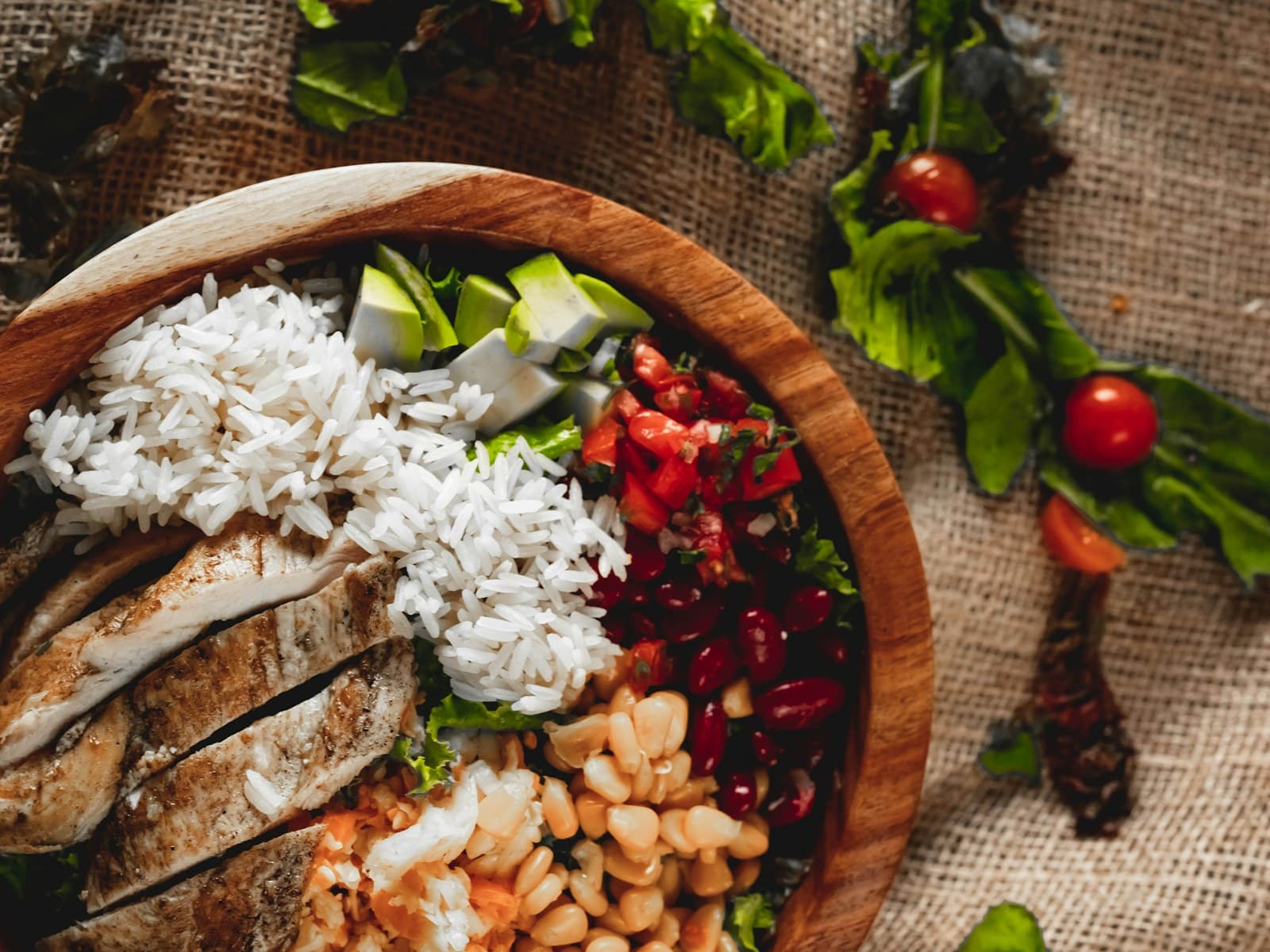
A bean-and-rice bowl makes the same point in a different way. Rice contributes carbohydrates, beans contribute carbohydrates and protein, and toppings such as avocado, cheese, or dressing can add fat along with other nutrients. A sandwich, noodle dish, soup, or dinner plate can be read in the same practical way: identify the major ingredients first, then notice which macronutrients each one may contribute.
What protein contributes to a meal
Protein is commonly found in foods such as beans, lentils, eggs, fish, poultry, meat, dairy foods, tofu, and some nuts and seeds. In everyday meal planning, a protein-containing food can serve as one of the meal’s central components. In a lentil soup, lentils are part of the main substance of the dish; in a yogurt bowl, yogurt may be the anchor around which fruit, grains, or nuts are added.
Thinking in terms of a protein-containing ingredient is often more useful than trying to make every meal fit a fixed target. The amount depends on the food, recipe, serving size, and preparation. A photo may show that eggs are present, but it may not reveal their size, the amount of oil used in the pan, or whether a sauce contains additional ingredients. Those details are reasons to treat a photo-based estimate as editable rather than as a direct measurement.
Carbohydrates are more than one food
Carbohydrate-containing foods are familiar meal foundations: bread, rice, pasta, potatoes, corn, oats, fruit, and many beans and lentils. They can appear as a side, a base, a filling, or part of a mixed recipe. A rice-and-vegetable bowl, a bean taco, and toast with fruit look different, but each includes foods that contribute carbohydrates.
The word carbohydrate does not describe a single eating pattern or a moral category. The broader context includes the whole food, the recipe, the portion, and what accompanies it. WHO emphasizes varied and balanced dietary patterns, while MyPlate offers food groups as a flexible way to think about variety. Together, those ideas support looking at the meal as a combination rather than judging one ingredient in isolation.
Fat often comes through ingredients and cooking
Fat may be easy to spot in foods such as avocado, nuts, seeds, cheese, butter, and oils, but it can also be part of sauces, spreads, dressings, pastries, and cooked dishes. In practical meal description, fat-containing ingredients often influence a dish’s richness, texture, and flavor. A tablespoon of dressing, a handful of nuts, or oil used during cooking can matter to an estimate even when it occupies little space in a photo.
Mixed meals make this especially important. A roasted vegetable plate may look similar whether it was cooked with a small amount of oil or served with a generous dressing, yet those details change the ingredient list and the estimated macros. If you know the recipe or can remember an added topping, edit the entry. If you do not know, keep the estimate contextual and avoid treating a visual guess as a measurement.
Use macros as a description, not a verdict
Macros can help describe what is on a plate: which foods contribute protein, which provide carbohydrates, and where fat may come from. They are one lens, not a complete account of a meal’s variety or enjoyment. MyPlate presents food groups as a flexible framework, and WHO’s broad guidance centers on varied, balanced patterns rather than a rigid menu. That makes room for different cuisines, routines, budgets, and preferences.
FoodSnap can support this kind of review by turning a meal photo into editable calorie, macro, ingredient, and portion estimates. Before saving, check whether the visible serving size seems plausible, whether a beverage or sauce was included, and whether an ingredient was left out. Over several meals, the useful question is often “What did this meal contain, and what details should I record?” rather than “Did this plate pass or fail?”
Sources
- Healthy diet — World Health Organization
- What Is MyPlate? — USDA MyPlate
FoodSnap provides editable nutrition estimates. This article is for general educational purposes and is not a substitute for individualized medical or dietary advice from a qualified professional.